
Plant shutdowns and maintenance windows: an opportunity to review and optimize industrial electric heating equipment
Plant shutdowns and maintenance windows: an opportunity to review and optimize industrial electric heating equipment
Plant shutdowns and industrial electric heating equipment
In many industrial sectors, especially in plants that operate 24/7 throughout the year, plant shutdowns or maintenance windows are planned according to demand, their impact on production, or the moment when it is most efficient to carry out maintenance, inspection or improvement tasks.
Summer may coincide with a period of lower activity in some facilities, but the main criterion is usually to identify the moment of lower demand or the point at which the intervention is most efficient for the production process. Whatever the chosen moment, these shutdowns are a strategic opportunity to review facilities, detect possible issues and prepare equipment to continue operating reliably.
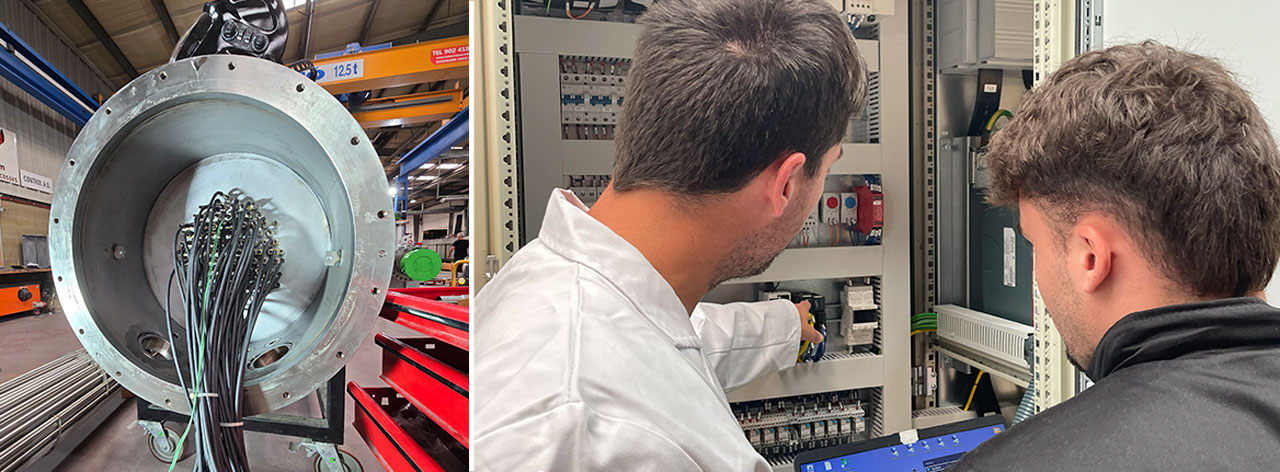
In the case of industrial electric heating equipment, this review can be especially relevant. Heating elements, heaters, control systems, insulation and heat transfer elements often work under demanding conditions and play a key role in the continuity of the production process. For this reason, taking advantage of a maintenance window to check their condition can not only help prevent breakdowns, but also improve the efficiency, reliability and performance of the installation.
Energy efficiency: a priority for industry
The review of thermal equipment should not be understood only as a maintenance task. In the current context, it is also part of a broader strategy for energy efficiency and process optimization.
Improving energy efficiency in industry remains a priority for public authorities and specialized organizations. In this context, programs such as those promoted by IDAE focus on actions such as the technological renewal of industrial equipment and processes or the implementation of energy management systems. This reinforces a clear idea: reviewing and optimizing industrial equipment is increasingly important to reduce consumption, improve performance and move towards a more competitive industry.
The International Energy Agency also identifies industry as the sector with the greatest weight in final energy demand, accounting for around 40% of the global total. In its Energy Efficiency 2025 report, it highlights measures such as process optimization, energy management, the electrification of low-temperature heat and the improvement of insulation as key levers to accelerate industrial efficiency.
In this scenario, industrial electric heating equipment can play an important role, especially when it is properly sized, correctly maintained, optimized and integrated into the production process.
What to check during a plant shutdown or maintenance window?
A plant shutdown, a maintenance window or a period of lower activity can be a good time to check different areas of the thermal system. The objective is not only to check that the equipment is working, but also to understand its condition and whether it is performing as expected.
Some of the key points that should be checked are:
- Condition of heating resistors and heating elements, to detect wear, deformation, scale build-up or signs of deterioration.
- Electrical connections and wiring, to check for loose connections, overheating or components in poor condition.
- Thermostats, probes and control systems, to ensure accurate temperature readings and proper process regulation.
- Insulation and resistance values, especially in equipment exposed to demanding operating conditions.
- Thermal insulation of pipes, tanks or associated equipment, as deteriorated insulation can increase heat losses.
- Presence of scale, sediments or residues, especially in immersion equipment, where any build-up can directly affect heat transfer.
- Response time and thermal performance of the equipment, to assess whether the system needs more energy or more time to reach the required temperature.
In immersion equipment, it is advisable to carry out periodic visual inspections, clean the heating elements, check thermostats and temperature probes, inspect electrical components and verify insulation and resistance values. To explore these good practices in more detail, you can consult the IES SOLER article on how to optimize the useful life of electric immersion heaters.
Critical spare parts: planning to avoid unplanned downtime
In industrial electric heating equipment, planning is not only about checking the condition of components, but also about anticipating possible spare part needs.
IES SOLER’s experience in the sector shows that having a minimum stock of critical spare parts can be essential to ensure operational continuity. Manufacturing lead times for this type of equipment are rarely less than 4 or 5 weeks and, in many cases, can be longer depending on the complexity of the project, the materials or the technical specifications required.
In the event of an unexpected breakdown, not having the right component available can extend downtime and generate significant production losses for the client. For this reason, it is advisable to identify which elements are critical to the operation of the installation and maintain a minimum stock that allows a fast response in the event of an incident.
This planning is especially important in plants that operate continuously, where any unplanned downtime can have a direct impact on production, efficiency and delivery times.
What problems can a preventive inspection help avoid?
A proper inspection of industrial electric heating equipment can help anticipate problems that, during full production, could have a significant direct impact on operational continuity.
Among the most common issues that can be prevented are loss of thermal performance, increased energy consumption, temperature deviations, premature component wear, the urgent need for spare parts, lack of available critical components or unplanned downtime.
It is also important to check the thermal insulation of pipes, tanks or associated equipment. Deteriorated insulation can increase heat losses and force the system to work harder to maintain the required temperature. In this regard, the IEA (International Energy Agency) identifies the improvement of process insulation as one of the key measures to advance efficiency within the industrial sector.
Inspecting equipment today to improve tomorrow’s performance
A maintenance window can also be used to assess whether industrial electric heating equipment is performing as expected or whether there is room for improvement. It is not only about detecting possible breakdowns, but also about identifying points where the system may be consuming more energy than necessary, losing thermal efficiency or requiring better process control.
This approach fits within the current European context, where the decarbonization of industrial process heat is gaining importance. The European Commission, through the Innovation Fund’s IF25 Heat Auction, supports projects that use technologies such as electric boilers, resistance heating, induction, plasma, heat pumps or renewable heat solutions to reduce emissions in industrial processes.
In this scenario, maintenance and inspection of thermal equipment can help companies make decisions that are more aligned with the future of the sector: repairing, replacing components, improving insulation, adjusting control and regulation systems, or assessing whether the equipment remains suitable for the real operating conditions and future needs of the installation.
Preparing for tomorrow’s continuity today: the role of IES SOLER
Taking advantage of a plant shutdown, a maintenance window or a period of lower activity to inspect industrial electric heating equipment can make the difference between resuming activity reliably or facing unexpected issues during full production.
A proper inspection makes it possible to detect wear, check the operation of control systems, clean critical elements, verify insulation and anticipate possible spare part or improvement needs. Above all, it helps understand the real condition of the equipment and make more informed decisions on efficiency, maintenance and optimization.
At IES SOLER, through our electric heating division, we design, manufacture and commission industrial electric heating equipment adapted to the needs of each project. We work with solutions such as immersion heaters, electric resistors, tubular heating elements, air heaters, temperature control systems and electric heat tracing.
During shutdowns or periods of lower activity, this experience allows us to help companies inspect the condition of their equipment, detect possible areas for improvement and assess solutions adapted to their processes. The objective is not only to have functional equipment, but to ensure that it operates efficiently, reliably and in line with the real conditions of the installation.
For this reason, a technical inspection should also be accompanied by good spare parts planning. Identifying critical components and keeping a minimum stock can make the difference between an incident resolved quickly and unplanned downtime with a significant impact on production.
In a context in which industry is moving towards more efficient, electrified and sustainable processes, periods of lower demand or activity can become a strategic opportunity to prepare the plant for the challenges of the coming months.

