Decarbonizing the chemical industry: the challenges of transforming industrial processes
Decarbonizing the chemical industry: the challenges of transforming industrial processes
Decarbonization has become one of the major challenges of the European chemical industry. In a context marked by environmental demands, rising energy costs and the need to maintain industrial competitiveness, companies in the sector are facing a profound transformation of their production processes.
But decarbonizing the chemical industry is not just a matter of replacing one energy source with another. It involves rethinking energy-intensive industrial processes, adapting infrastructures, integrating new technologies and ensuring that this transformation can be carried out without compromising production, safety or the quality of the processes.
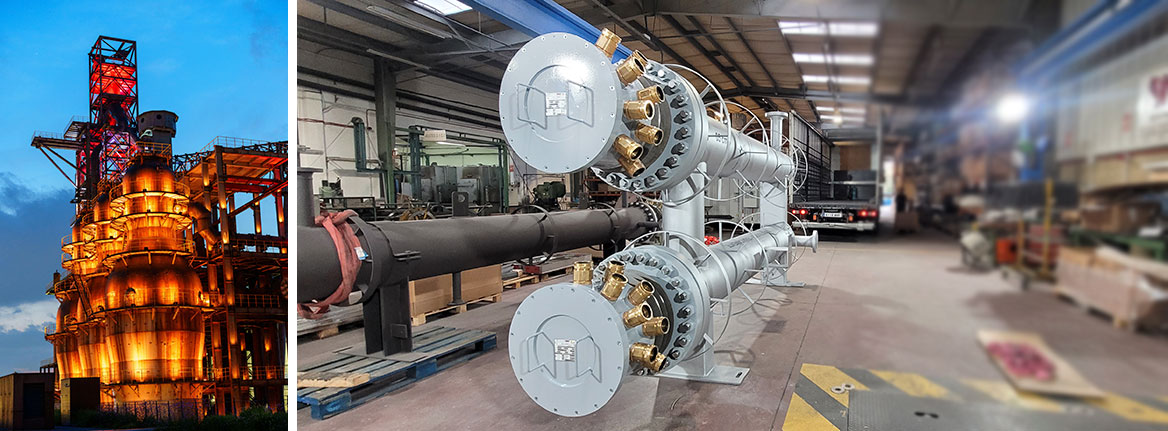
In this context, different organizations and experts in the sector agree that industrial decarbonization also represents a strategic opportunity to modernize the industry and move towards more efficient and sustainable models.
- An energy-intensive and difficult-to-decarbonize industry
The chemical industry is one of the industrial sectors with the highest energy consumption and one of the most complex to transform. Many of its processes require industrial heat, steam, pressure and continuous operation, which leads to a high energy dependency.
According to various reports on industrial decarbonization, the chemical sector is part of the so-called hard-to-abate sectors, that is, sectors that are difficult to decarbonize due to their high dependence on fossil fuels, carbon-derived raw materials and highly energy-intensive processes.
This reality makes the energy transformation of the chemical sector particularly complex. Companies must not only reduce emissions, but also maintain the reliability of processes, control costs and ensure competitiveness in a global market.
- Dependence on fossil fuels
Uno de los principales retos de la industria química es su dependencia histórica del gas natural y otros combustibles fósiles para generar calor industrial y alimentar procesos térmicos.
Muchas instalaciones fueron diseñadas hace décadas bajo modelos energéticos completamente distintos a los actuales. Esto provoca que, todavía hoy, una parte importante de los procesos productivos siga dependiendo de sistemas basados en combustión.
La necesidad de reducir emisiones está impulsando una progresiva transformación hacia modelos energéticos más eficientes y electrificados. Sin embargo, este cambio no siempre es inmediato ni sencillo, especialmente en procesos que requieren temperaturas elevadas o funcionamiento continuo.
- The challenge of green electricity and energy infrastructure
The availability of green electricity is another of the great challenges for the chemical industry.
The progressive electrification of industrial processes requires an energy infrastructure prepared to assume new power demands and guarantee stability in supply. In addition, different industrial sectors will compete in the coming years to access renewable electricity and green hydrogen.
This scenario forces many companies to rethink their energy strategy and to analyze in detail the technical and economic viability of transformation projects.
In this sense, energy planning, technical integration and consumption optimization become key factors to guarantee efficient electrification of industrial processes.
- High investments and need for progressive transformation
The decarbonization of the chemical industry also implies significant investments in technology, infrastructure and process adaptation.
The modernization of thermal systems, the incorporation of new technologies or the replacement of obsolete equipment require long-term projects and strategic planning.
Many companies are faced with the challenge of having to transform their processes without interrupting production or affecting the quality of the final products. This requires implementing progressive changes, adapted to each installation and each production need.
For this reason, industrial decarbonization cannot be understood as a standard solution, but as a process that requires analysis, engineering and specialized technical knowledge.
- Circularity and new forms of production
In addition to reducing emissions, the chemical industry is also moving towards more circular and resource-efficient models.
Circular chemistry proposes new ways of designing processes and materials to reduce waste, reuse resources and minimise the environmental impact of products throughout their life cycle.
This approach not only affects raw materials, but also the way energy is consumed and managed within industrial processes.
The combination of energy efficiency, electrification and circularity will be one of the great keys to industrial transformation in the coming years.
The role of industrial electric heat in the transformation of the chemical sector
Faced with these challenges, industrial electric heat is gaining prominence as one of the technologies capable of helping companies move towards more efficient and sustainable processes.
The electrification of thermal processes allows us to reduce our dependence on fossil fuels, improve process control and adapt systems to new energy and environmental requirements.
However, electrifying an industrial process does not simply consist of replacing one piece of equipment with another. Factors such as:
- the thermal needs of the process
- the integration with the existing installation
- the available power
- the control and automation
- the overall efficiency of the system
For this reason, at IES Soler we are a specialized technical partner and we accompany companies from different sectors throughout the transformation process.
Beyond the product
At IES Soler we understand industrial decarbonization as an integral process. It is not just about manufacturing equipment, but also about providing engineering, technical knowledge and tailor-made electric heat solutions adapted to each industrial process.
We work alongside our clients to analyse the needs of each installation, define the best technical solution and integrate industrial electric heat systems that help improve the efficiency, safety and sustainability of the processes.
This approach allows us to tackle the energy transformation in a progressive, adapted and viable way from a technical and operational point of view.
Expoquimia 2026: a meeting point for industrial transformation
Energy transformation and decarbonization will be some of the main themes that will be discussed at Expoquimia 2026, one of the leading international fairs for the chemical sector and process industries.
Our team will be present at Expoquimia 2026, to share how we approach the transformation of industrial processes through tailor-made electric heat solutions, with an approach based on engineering, efficiency, safety and sustainability.